
How to Update User Personas as Your Business Grows
When we started building our product, we believed we clearly knew who we were designing for. Or at least, that’s what we believed.
Our personas were based on early interviews, assumptions, and a small group of users. Everything felt aligned. But as the business grew, our real user base looked very different from what we had originally imagined.
This is a common experience. And it is exactly why static personas stop working. User personas shouldn’t describe who your users were at the beginning, they should reflect who your users are today.
In this article, we’ll explore practical ways to evolve your user personas so they stay relevant as your business grows.
Why do user personas need to be updated as your business grows?
User personas are created at a specific moment in your business journey. They reflect the users’ behaviors, goals, and pain points that exist at that time. But none of these remain constant.
As your product matures, features become more advanced, pricing changes, onboarding improves, and new industries or roles begin using your product. Even existing users start expecting different outcomes from the same tool.
At the same time, your business priorities shift — from validation to growth, from growth to retention, and from retention to expansion. Each shift changes what matters most to your users.
When personas are not updated alongside these changes, they slowly stop representing real behavior. They may still look accurate on paper, but they no longer explain how users actually think, decide, or work.
That is why personas don’t just need maintenance — they need evolution.
How to tell if your user personas are outdated?
You don’t need a fixed schedule to update personas. The right time usually becomes obvious through everyday product and business signals.
If your team struggles to relate real users to existing personas, that’s a sign. If customer conversations sound different from what your personas describe, that’s another. And if new user segments are growing faster than your original target audience, your personas are already outdated.
Sometimes the signal comes from product usage. Features that were once secondary become core. Workflows change. Expectations rise. Personas that no longer reflect these behaviors stop helping teams make confident decisions.
The simplest rule is this:
If your understanding of your users has changed, your personas should change too.
How to update user personas in practice?
Updating personas works best when it is treated as a research activity, not a documentation task. The goal is not to make personas look better, but to make them more accurate.
Start with current user reality
Begin with users you have today, not the users you started with. Recent customers, active users, and even churned users often reveal how expectations and motivations have shifted.
For example, a persona that once valued “ease of learning” might now care more about “speed of execution” because the product has matured and users are more experienced. That single shift can change how features, onboarding, and messaging should be designed.
Start by speaking with a few current customers and understanding what has changed in their goals, expectations, or daily workflows. Capture these shifts as clear insights, not assumptions. Then update your existing personas with those learnings instead of rewriting them from scratch.
In Personas by UserBit, interviews can stay closely connected to persona profiles within the same workflow, which helps teams treat persona updates as part of ongoing research rather than a separate documentation task.
Update behaviors before updating labels
Many teams start by changing persona names or job titles. But the real value comes from updating behavior.
Look for changes in:
-
How users make decisions
-
Identify what frustrates them now.
-
How they use or combine features
For example, two users with the same job title may now use your product in completely different ways — one for quick tasks, another for deep analysis. This is a strong signal that your persona needs to evolve, split, or be redefined.
Decide whether to split, merge, or refocus
Persona updates are not always about editing text. Sometimes they are about structure.
If one persona represents conflicting goals, it should be split.
If two personas behave almost the same, they should be merged.
If a persona no longer reflects active users, it should be retired.
This approach keeps your persona set clean, relevant, and easy to use.
Keep personas grounded in research
Persona updates can be guided by different research methods. Not every change requires the same type of input, and the approach depends on what has shifted in the product, the business, or user behavior. Choosing the right method for the right change keeps persona updates purposeful and accurate.
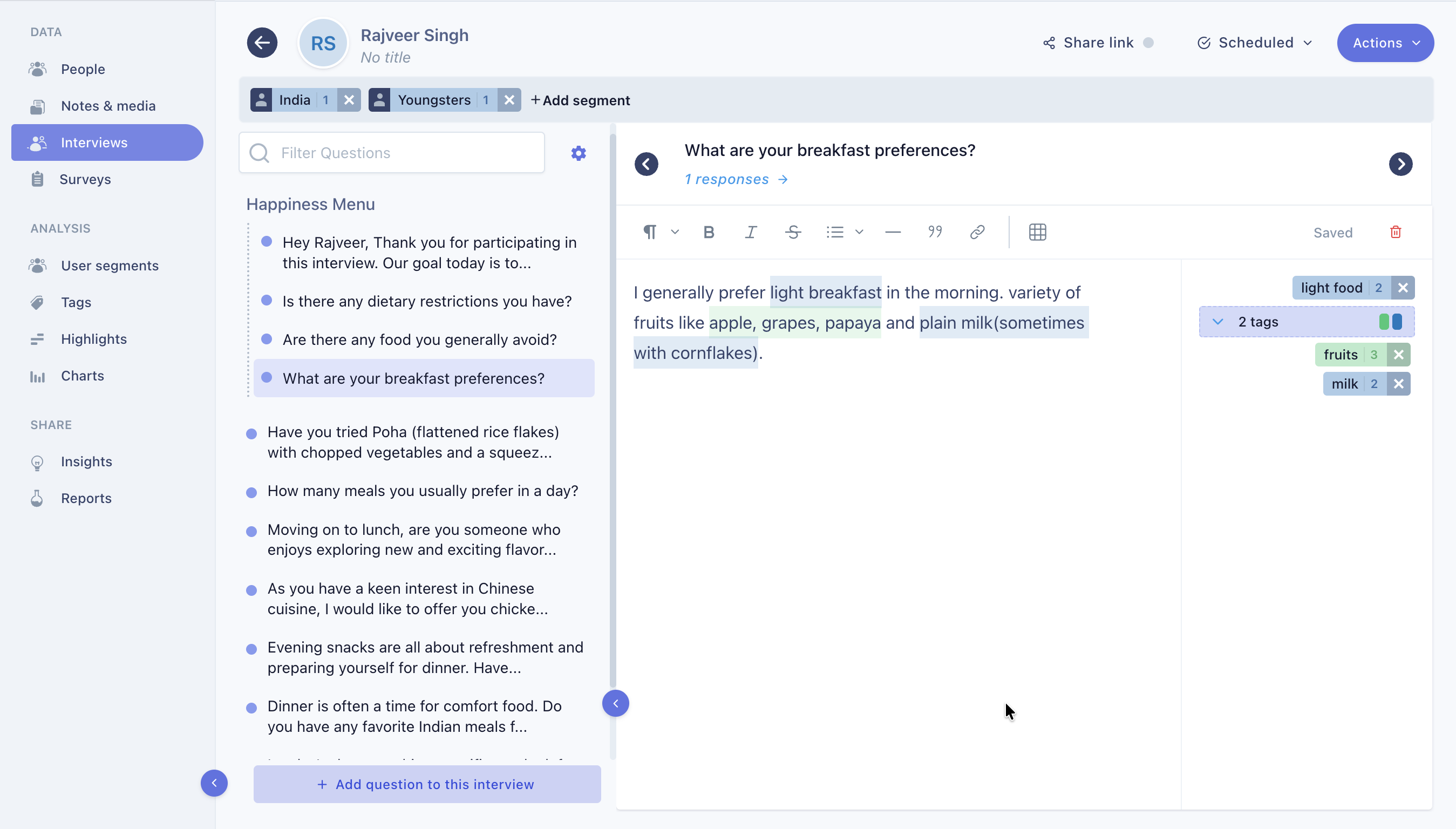
Interviews are often the starting point, revealing why users behave the way they do — their motivations, fears, priorities, and trade-offs. These insights are especially important when business goals shift, helping teams understand evolving expectations.
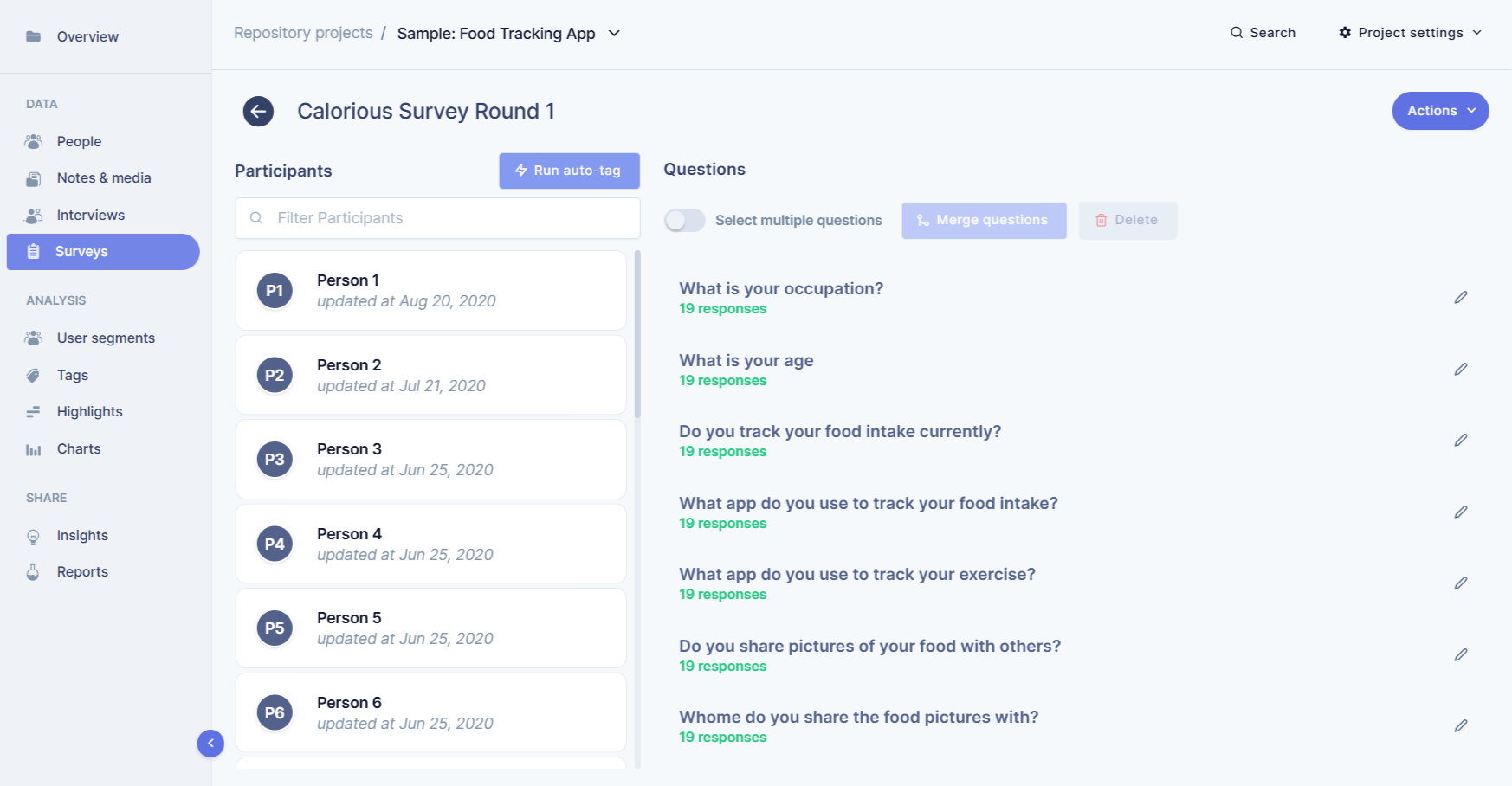
Surveys help understand how widespread behaviors and attitudes are, ensuring personas reflect common patterns rather than isolated stories. They are particularly useful when user behavior is changing across segments.
Usability testing shows where users struggle in real workflows. These friction points often indicate rising expectations and should directly shape persona frustrations, needs, and success criteria.
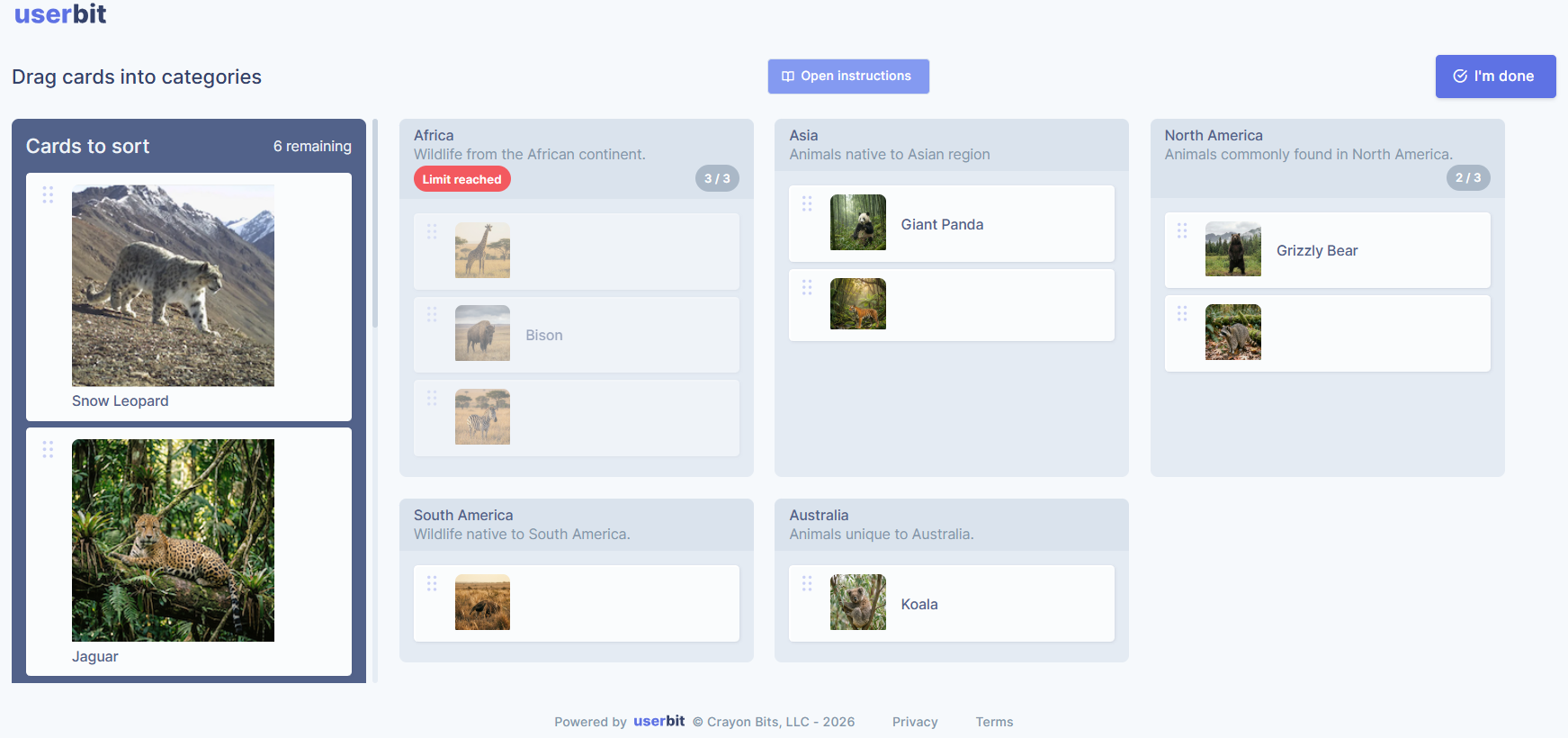
Card sorting exposes how users mentally organize information and features. When these groupings change, it signals shifts in mental models — a critical cue for evolving persona priorities and product understanding. This method is especially helpful when the product structure changes.
Make persona updates visible to teams
A persona that is updated silently is almost as bad as a persona that is never updated.
Whenever personas evolve, share what changed and why. This helps product, design, and marketing teams understand that personas are living tools, not static profiles.
In UserBit, persona updates can be shared, exported, and reviewed collaboratively, which keeps everyone aligned on the same user reality.
Think of personas as versions, not final outputs
The most useful mindset shift is this:
A persona is not a final deliverable. It is a version of your current understanding.
Version 1 reflects early users.
Version 2 reflects growth users.
Version 3 reflects mature users.
Each version is more accurate than the last — and that is exactly how personas should evolve.
A simple way to keep personas relevant
Persona evolution does not need to be complex. A lightweight, repeatable approach works best.
Review your personas regularly. Revalidate them with current users. Update behaviors and priorities based on real research. Reorganize or restructure when needed. Then reshare the updated personas with your team.
This small habit prevents personas from becoming outdated and keeps them aligned with real user needs.
Conclusion
Your business will continue to grow. Your users will continue to change. And your product will continue to evolve.
Your personas should reflect all of that. Updating personas is not extra work. It is how you protect your product from designing for the past.
If you’re looking for a tool that supports persona research, updates, and collaboration in one place, you can explore Personas by UserBit.